

Whereas the healthcare industry differs in many ways with other customer-centric sectors, one thing is true for both: no patients/customers; no growth—and therefore no help to the community, which is probably what you aimed to do in the first place. However, providers are not taught the side of the business that leads them to filling their calendars, so they struggle when running their practices. With patient care taking the front seat to online medical marketing efforts (and rightly so), White Coat Web is offering 5 tips to help you stay booked and help more people.
The Importance of Online Medical Marketing
A medical history of patient behavior: Patient behavior in selecting healthcare providers has undergone significant transformation over the last two decades. Traditionally, patients relied primarily on physician referrals, word-of-mouth recommendations from family and friends, and proximity to their location. Spoiler alert: it actually continues to be this way, but with major changes due to the digital landscape. When analyzing the current trends and statistics, we find that:
- 94% of patients use online reviews to evaluate providers.
- Nearly 75% of patients turn to online reviews as the first step when searching for a new physician.
- Nearly 90% of Americans are using social media for medical information, multiplying the channel through which to communicate with potential patients.
- While online reviews are crucial, patients also consider: convenient scheduling, location, insurance acceptance, experience on the provider’s website.
With this data in mind, it is clear to see that while patients still look for the same thing: trustworthiness and expert care, it’s how they find it, through digital-first research, that has changed drastically. As a result, online medical marketing strategies take on a central role in bridging the gap between providers and those who need their services.
🥼 📺 Watch our 3-minute webisode on the Key Elements to Consider When Building a Website
5 Online Medical Marketing Tips to Fill Your Practice’s Appointment Calendar
1. Get on the Net with GBP (Google Business Profile)
If people can’t find your medical practice on Google Maps, can they really find it at all? A streamlined Google Business Profile puts you on the map—literally. Not only does it tell patients that you are there, but it can also help you tell them why to choose you.
Make sure to create a GBP and include:
- NAP: name, address, and phone number.
- Description: Use the business description field to provide useful information on services and products offered, as well as the mission and history of your business.
- Categories: They help your customers find accurate, specific results for services they’re interested in. Make sure that you use as few categories as possible to describe your overall core business from the provided list.
- Business hours.
- A link to your website (more on this in point 3).
- Photos of your practice.
Also, you should encourage patients to leave reviews, which leads us to our next tip.
2. Spread the Word
Reviews are patients’ decision-makers, and they are mostly on Google. A well-reputed practice enhances patient trust and helps them contact you. Here are some tips:
- Remind customers to leave reviews by sharing a QR code or providing a link to your Google Business Profile.
- Reply to reviews so that they know their feedback matters.
- To show that you care, you can reply to reviews and give expanded info on the services or experiences.
3. Build an Engaging Site
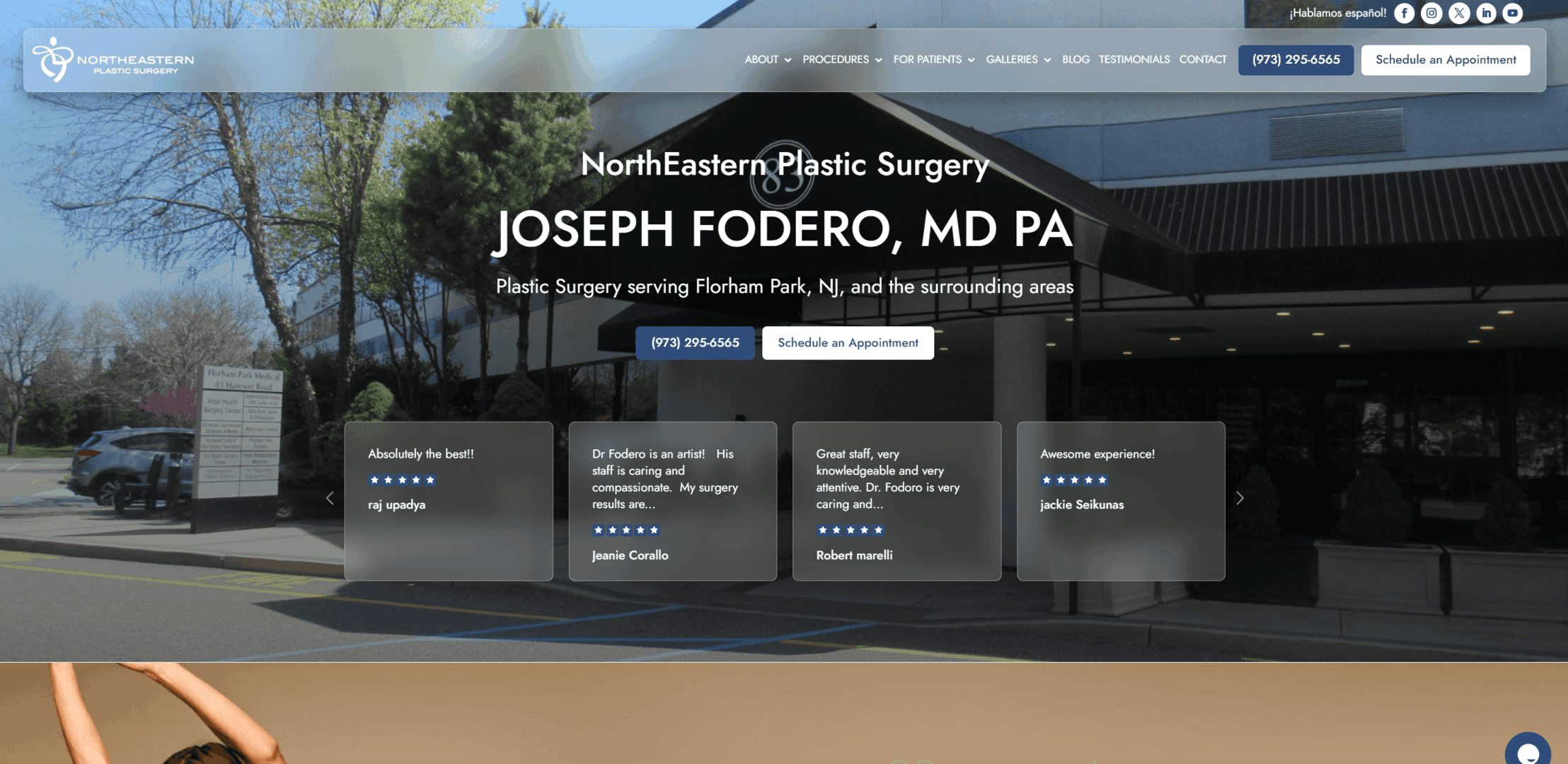
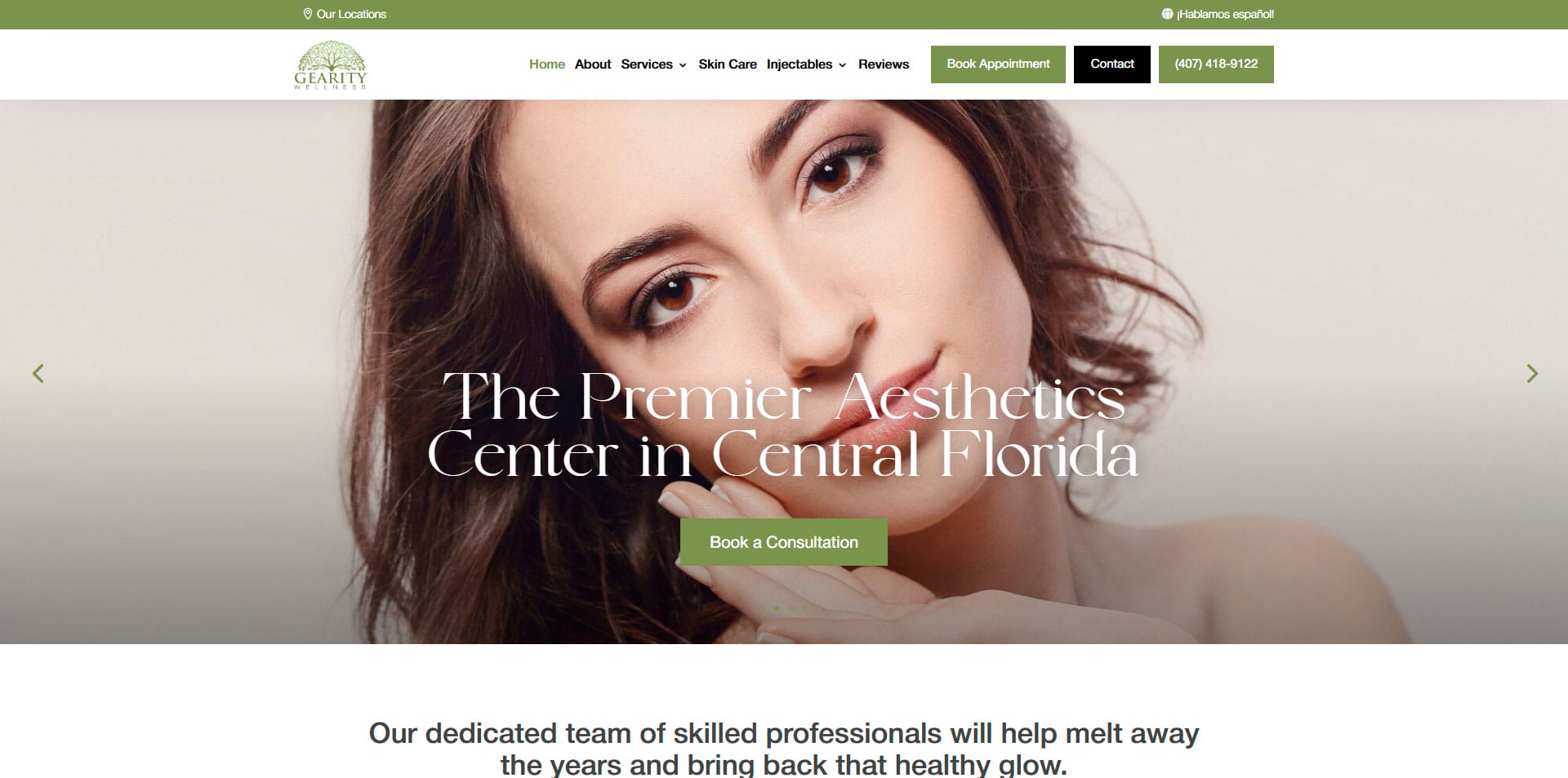
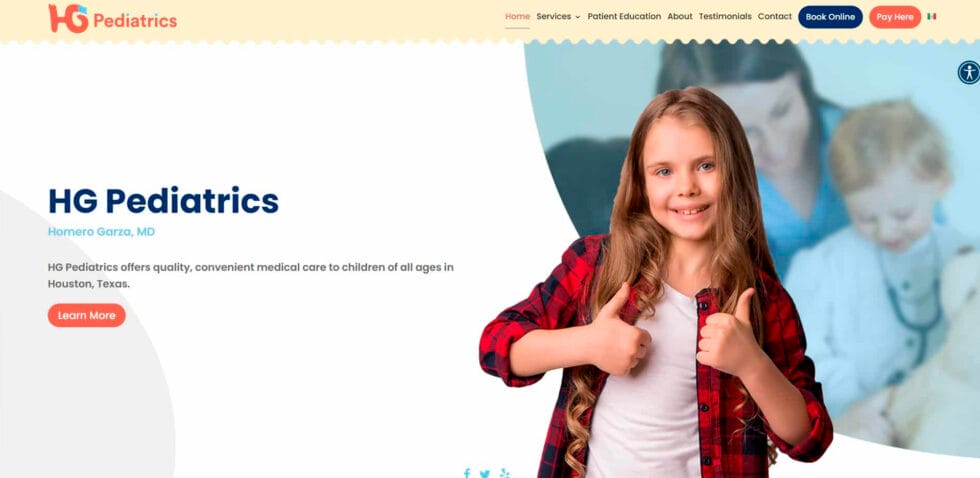
This is where we get to rub our hands together—our medical websites really do make us proud. Just like you would not practice without your stethoscope, you should not operate without a modern and engaging website that reflects who you are. Your medical practice’s website should look modern, be consistent with your industry, but also unique enough to stand out. In order to do that, make it sure it:
- Conveys your tone, values, and uniqueness.
- Loads fast and is mobile-optimized.
- Incorporates the latest in user experience and user interface design.
- Includes open lines of communication.
- Provides comprehensive information at a glance.
- Offers great navigation and readability.
- Caters to your specific community —even if they speak another language.
- Contains quick-access appointment scheduling tools.
Want to see some examples?
At White Coat Web, we have helped numerous doctors get their practices on their digital feet. Here are a few:
4. Make Scheduling Easy
If you seamlessly integrate electronic health records with scheduling systems, you will create a more fluid and responsive patient experience. Patients’ time is extremely valuable, so streamlining your appointment booking system can help solve their scheduling complications. EHR integration, therefore, becomes not only a tool for operational improvement but also a cornerstone of patient-centered care that fosters loyalty and boosts conversion rates.
🥼 Read more: EHR Integration: The 3 Ways in Which It Boosts Patient Satisfaction… and Brings Patients In
5. Harness Your Expertise with Educational Content
Your website can also work as a tool to empower patients’ self management and address their most common concerns, which will become your keywords. Whether it is in the form of a service page to provide information about what you have to offer or a blog post to elaborate even further, you want to share knowledge with your community. And when you do so, we encourage you to keep the following tips in mind:
- Title the content with the keyword. For example, if it’s “how to treat a cold” make sure that that’s the title so that then Google can pick that up.
- When you upload it to your site, use plugins that will help you know whether it is optimized so that search engines will show it to your target audience (aka, people typing that keyword on the search bar).
- Make it patient friendly. We know, easier said than done, but when you explain medical issues in layman’s terms, it will go a long way when engaging with your audience.
- Write more than one piece of content about the same thing. For example, if the keyword is “flu symptoms”; write about a) what to do this flu season, b) five tips for overcoming the flu, c) best places to get your flu shot, etc. When you do that, it kind of signals to Google that you’re actually an expert in this field.
Don’t have time to write? Give us a call.
Ready to Fill Your Practice’s Appointment Calendar?
A word of advice: before you dive headfirst into these online medical marketing strategies, make sure your office is ready to receive a new influx of patients.
White Coat Web specializes in online medical marketing, and in our experience, practices go from zero online leads to 10 or 20 new patient inquiries daily after their online medical marketing efforts land. When you partner with us, we will not only set you up for success but also prepare you for the aftermath. Get in touch to discuss the ways in which we can help you get—and stay—at the top of your game.