
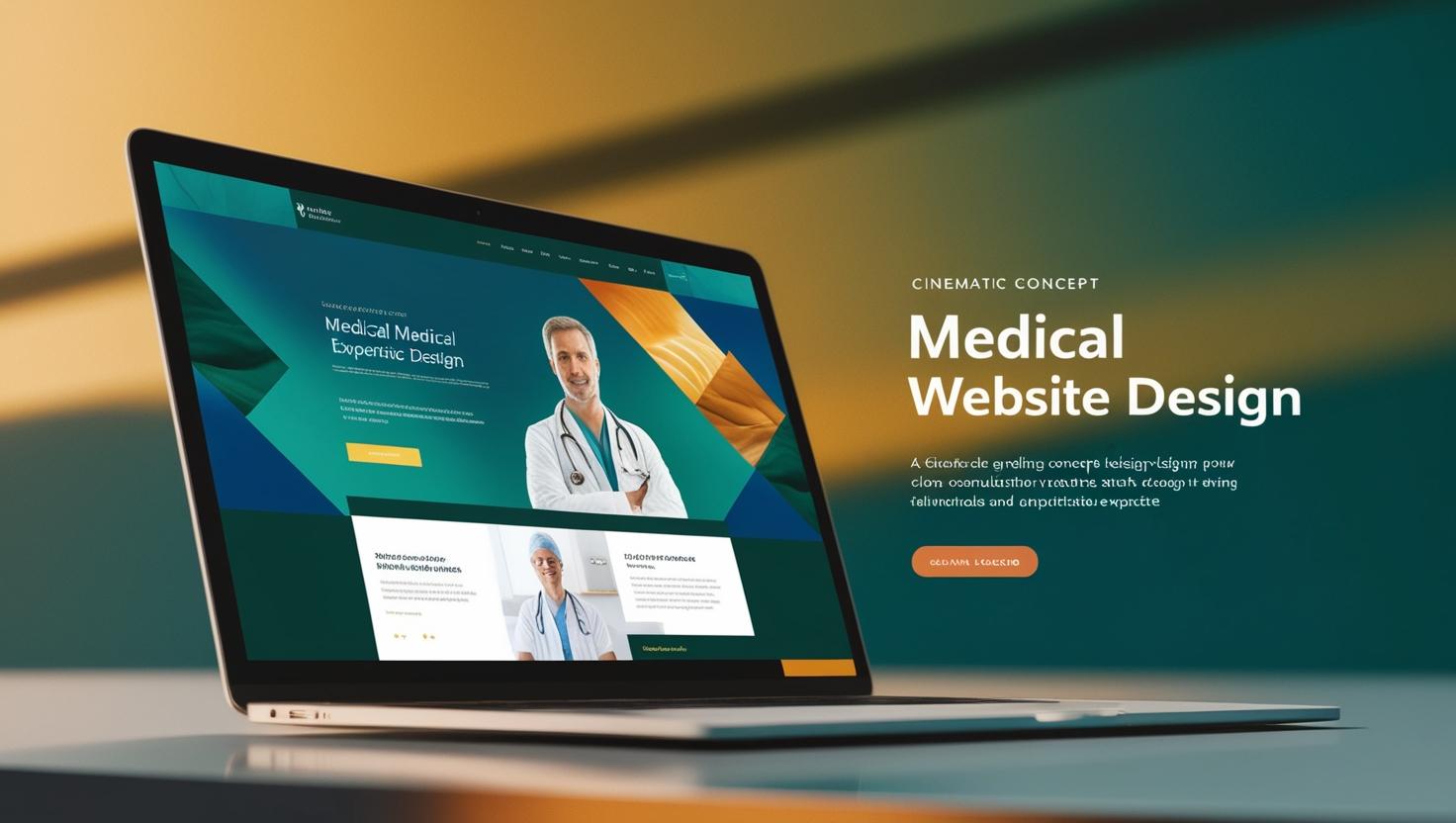
Some diagnoses are simpler than others—and we are not talking about the human body. When assessing your medical practice’s website, some issues might be clearer while others are well-hidden. The truth is that a thorough look at your medical website is the first step to successfully reaching potential patients, bringing them to your offices, and strengthening your reputation. And just as patients require regular check-ups for their continued well-being, so does your website—to ensure its optimal performance and patient engagement… especially when you are not there to personally create the connection.
6 Aspects of a Healthy Website
#1 First Impressions Matter: Your Digital Waiting Room
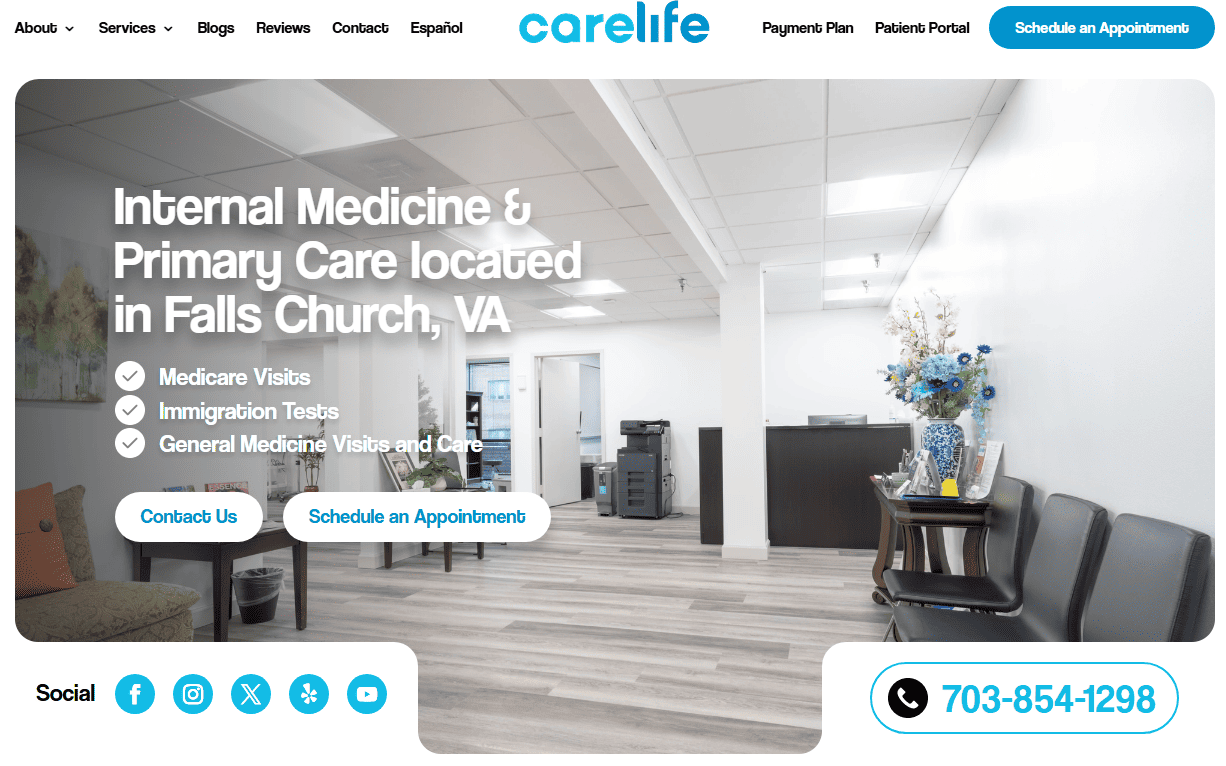
Just as your brick-and-mortar waiting room and/or reception should be relaxing, inviting, and pleasant to be in, the home page of your website must communicate to your potential patients—without many words—that you are a safe and professional space to solve their concerns.
Some essential aspects to this include:
- Clean design: an uncluttered design transmits order and professionalism
- Easy navigation: as it mimics a well-organized and well-thought clinic
- Mobile responsiveness: for different types of users and devices
- High quality photography: that conveys the essence of your practice
- Unique copy: for clearly communicating your purpose and expertise
#2 Medical SEO for Qualified Traffic
Medical SEO matters because it is the strategy that will allow you to organically reach the exact patients that need your help, while also helping you create spaces for a user-centered approach and stay compliant with regulations.
A specialized digital marketing agency will take care of your website’s structure and SEO to make sure search engines and potential patients perceive you as an authority in your area. By implementing, optimizing, and continuously updating keyword research, pillar content, landing pages, key copy, meta descriptions, and more, your practice’s website will thrive.
🥼 More on how medical SEO works
#3 White Coat Content for Your White Coat Expertise
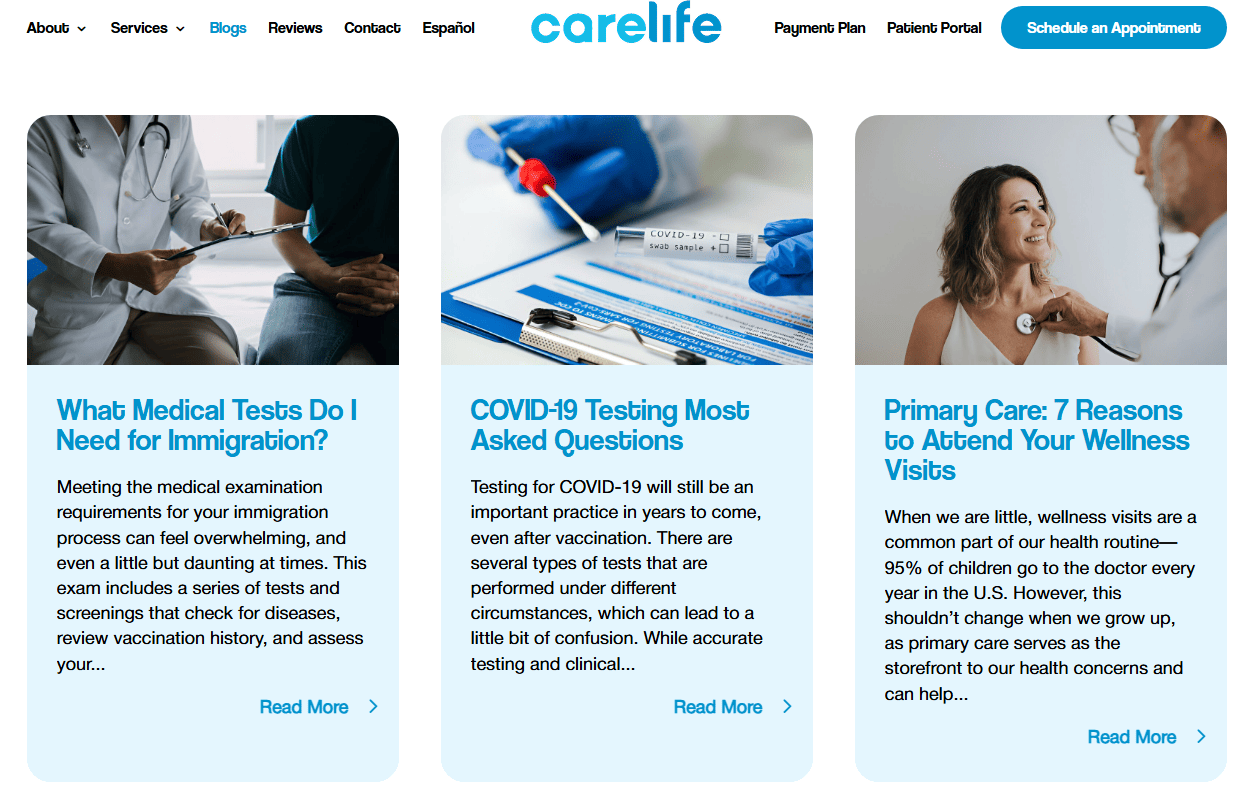
A patient-focused content strategy will allow you not only to rank on search engines but to truly connect with those who need it the most. Great medical practices build their online authority by giving people exactly what they need regarding their health concerns: true information and actionable next steps.
Think of it as prescribing knowledge for your potential patients—on autopilot.
Some ways you can do so are:
#4 Accessibility for Patient Equity
A medical website that is also ADA compliant shows that they are careful with regulation, but also mindful so that no patient is left behind. At White Coat Web, we partner with industry-leading accessibility experts who will make sure your website follows all regulations for:
- Preventing legal risks
- Improving patient experience
- Enhance SEO performance
- Reflect your commitment with access to care
For a compliant website, keep in mind that you should have alt text for images, great color contrast for great visibility, accessible scheduling methods, captions and/or transcripts for video or audio content, and a clear overall structure.
#5 Security and Compliance
Just like you wouldn’t perform a surgery without sterilizing your instruments, you shouldn’t run a medical website without following certain guidelines for both data protection and regulatory compliance.
HIPAA compliance isn’t just for your office paperwork. When you start collecting patient data through your website by using contact forms, scheduling tools, appointment requests, patient portals, etc, you must follow the same rules. This means, for example, that any form or system that collects health-related information must be encrypted and securely stored. You can do so with SSL encryptions that protect your data from unauthorized access.
Keep in mind that HIPAA violations, even in the digital world, can lead to fines, lawsuits, and reputational damage. With the right guidance and help, we can make sure your website and data are safe—for everyone involved.
🥼 More on the best practices for your medical website
#6 Call to Actions for Your Patients
When building a website and its corresponding content, it is always important to consider the call to action (CTA). These are phrases, buttons, and/or recommendations that guide the patient to the next step—which is, most of the time, scheduling an appointment.
It’s not only about writing a catchy phrase: for medical websites, making this process accessible and as easy as possible is key for turning browsers into real-life patients.
Implementing scheduling tools in your website is like having a 24/7 receptionist that takes care of your practice’s calendar, while also enhancing patient convenience and satisfaction.
Get Your Website’s X-Rays
While a medical website includes a lot of aspects for its ideal performance, this is an overview of some of the most relevant. A healthy website often means improved reputation, broader and stronger reach, and happier, engaged patients that trust your expertise.
But where should you start? Give us a call. You are a busy professional with much on your plate. At White Coat Web, we specialize in transferring your practice to the online world and helping you succeed while you help others.
When you partner with White Coat Web, an agency specializing in digital marketing for medical practices, you ensure the right dose of digital presence to keep your office in robust health and at the forefront of patient care.
Let’s get in touch and bring your medical design website’s health to the top.