

In an era defined by constant connectivity, not having EMR system integration can negatively affect your Austin practice, both internally and externally. On one hand, a disconnected technological infrastructure can cost your practice valuable time, money, and even patients. On the other, failing to integrate your EMR with other essential systems may leave you falling behind local competitors who have already taken steps to modernize their workflows. In this article, we’ll explore the risks Austin medical practices face without EMR system integration and what they could be missing out on by keeping their systems disconnected.
EMR System ≠ EMR Systems Integration
Two concepts that some Austin medical providers tend to confuse are EMR systems and EMR systems integration, which refer to different aspects of the same technological ecosystem.
An EMR system is software that allows medical practices to digitally store and manage patients’ medical records. Essentially, it serves as a replacement for traditional paper charts. EMR systems integration, on the other hand, involves connecting the digital systems a medical practice relies on in its daily operations to optimize workflows. This can positively impact the practice by saving time and money while improving the patient experience.
Featured Posts

Healthcare Website Design in Austin: 5 Essential Elements
Healthcare website design is now a key factor in helping every practice achieve better results and stand out locally. In the modern era, your website is your practice’s front desk, so to attract patients and retain them, make sure they can easily manage appointments,...

4 Tips for the Best Website Design for Medical Practices
Nowadays, one of the most decisive factors for any medical practice to have is a modern, optimized website, as it works both as an introduction for new patients and as a way for your loyal patient base can have access to information and other benefits, like a portal....
EMR Systems Integration in Action: A Practical Example
If you’re wondering how EMR systems integration could benefit your practice, consider the following hypothetical scenario.
Imagine an Austin medical practice using three separate systems: one for appointment scheduling, another for billing, and a third for managing patient records. Because they operate independently, information entered during the first interaction must be manually re-entered into the other systems. Staff may even need to contact patients again to verify information when discrepancies arise.
This process wastes valuable time for both medical and administrative staff while creating friction in the patient experience, potentially leading to negative reviews or even lost patients. Sounds like a process with room for improvement, doesn’t it? That’s because it is.
EMR systems integration aims to address these inefficiencies by connecting compatible platforms, allowing information to flow between them and reducing repetitive tasks throughout the process.
🧑🏻⚕️ Read More: EMR Integration: The Key to Improving Quality of Care
Benefits of Integrated Healthcare Systems
The advantages of EMR systems integration aren’t limited to what we’ve discussed so far. It can also offer your practice the following benefits:
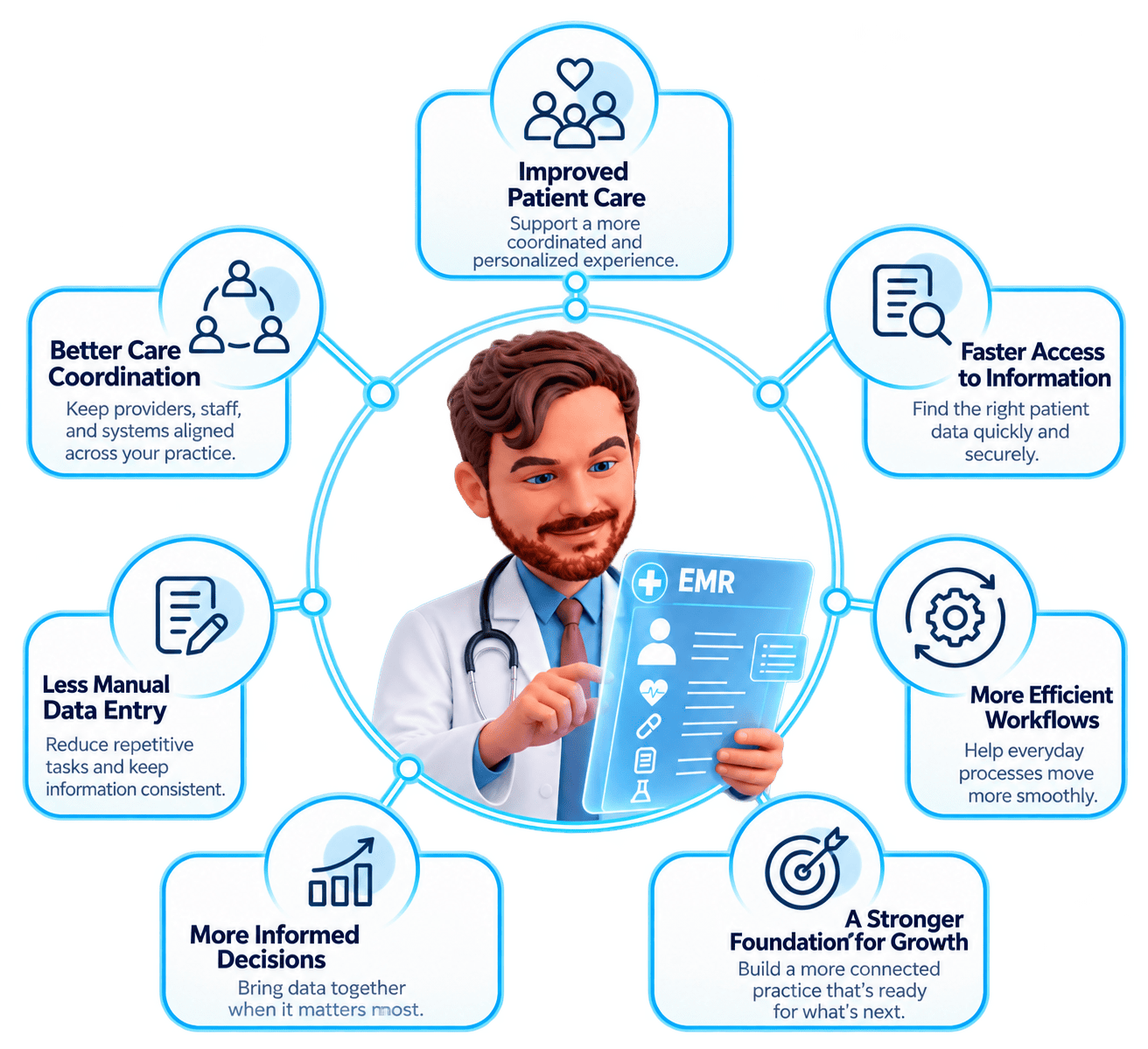
At White Coat Web, we’ve helped multiple healthcare providers integrate their EMR systems, helping them make better use of their technology and streamline their operations. If you’re in Austin, your practice could be next. Contact us to learn how we can assist you.
EMR Systems Integration: Why Is It Important to Embrace Change in Austin?
As humans, it’s natural to grow accustomed to doing things a certain way, making it difficult to imagine doing them differently. But what happens when we apply that same mindset to managing a medical practice? We risk falling behind other healthcare providers in Austin who have chosen to integrate their EMR systems.
To remain competitive in an era of constant change, it’s important to adapt to the opportunities brought about by technological advancements. Major healthcare organizations, such as Mayo Clinic, have recognized the importance of connected medical systems in improving patient care. However, smaller practices can also benefit from the advantages of integrated healthcare systems.
Think about it: what would Austin be without the connections that bring its different neighborhoods together? Take Congress Avenue, for example, linking South Austin to the heart of Downtown and the Texas State Capitol. Much like the roads connecting a growing city, medical practices need systems that communicate with one another to keep everything moving.
Choosing EMR systems integration means choosing to improve not only your practice’s workflows but also the overall patient experience.
📺 Got 3 Minutes? Watch Our Webisode on the Benefits of EMR Systems Integration:
FAQ
How can EMR system integration benefit my Austin practice?
EMR system integration can help your Austin practice save time, reduce administrative costs, and improve the patient experience by connecting systems and streamlining daily workflows.
What are some popular EMR systems?
athenahealth and eClinicalWorks are two popular EMR platforms used by medical practices. At White Coat Web, we work with both platforms to help providers integrate their systems and improve their workflows.
Does EMR stand for electronic medical records?
Yes. EMR stands for electronic medical records, referring to digital versions of patients’ medical charts that allow healthcare providers to store, access, and manage clinical information.
🔍 You Might Also Like: EMR Integration Services: 6 Ways to Transform Your Clinic in Austin
Bring Your Systems Together With White Coat Web
Just as Austin relies on its connections to keep moving, your medical practice depends on systems that work together. At White Coat Web, we help healthcare providers connect their EMR systems and streamline their workflows, with support throughout the integration process.
Contact us today and let our team take care of your EMR system integration in Austin.

Willie White Coat, AKA Graham Dunlap
Graham is a digital strategist with 10+ years of experience leading marketing teams. As the co-founder of White Coat Web, he focuses on modern SEO/GEO and digital growth, helping medical practices expand their online visibility and revenue while adapting to continuously evolving industry techniques.
In his words, “We’re passionate about people, so you can be passionate about your patients.”