

Creating content for Spanish speakers isn’t limited to using Google Translate, especially if you’re in the healthcare industry. For dentists like you, who are seeking to resonate with a new demographic of patients, learning about the nuances of marketing in Spanish is crucial. Building trust with a Hispanic audience means that your focus isn’t only increasing your patient count, but to make them understood, regardless of any language barrier. In this article, the experts from White Coat Web do a deep dive into marketing in Spanish and how it helps grow dental practices.
Why Marketing in Spanish Works Different
Marketing for Hispanic audiences implies creating content that is based on the needs of a vast range of nationalities, from Mexicans and Puerto Ricans to Cubans. With approximately 68 million Latinos currently living in the U.S, it has become crucial for healthcare practices to cross the language barrier and start understanding how a SEO content strategy for Spanish-speaking patients works differently.
Unlike regular marketing practices, which commonly target a homogeneous mainstream culture, marketing in Spanish requires understanding factors such as:
- Cultural differences: Recognizing the cultural and linguistic contrasts between Central and South American latinos is crucial when it comes to localization. These differences include slang terms, culinary traditions, musical preferences, and history.
- Nuanced translation: Using a direct translation into Spanish for your dental practice ads often fails when it comes to generating leads. Regional dialects vary depending on where your target audience is from, and so do aspects like cultural cues and writing tone.
- Community-based audiences: Latinos embrace a culture based on family values and union, which means that promoting dental services with an emphasis on individual wellbeing over caring for their loved ones may fail.
How It Translates to Dental Practices
A content strategy in Spanish for a dental practice is built based on cultural connection, localization, and engaging with the needs of the audience. For Hispanic patients, aspects like trust, emotion, and community are important factors that influence their decisions about their health.
For patients, Spanish is the language where they feel comfortable expressing their needs, their doubts, and their fears when it comes to their dental health. Procedures like getting braces, veneers and tooth extractions are often considered anxiety-inducing topics, and discussing them in their language through blog posts and landing pages is a way to build a foundation of trust that English doesn’t replicate. On the other hand, marketing in Spanish represents an opportunity for dentists to expand their patient count.
🥼If you’re a dentist, you might want to read: Localization For Dentists: Shine Near Your Patients
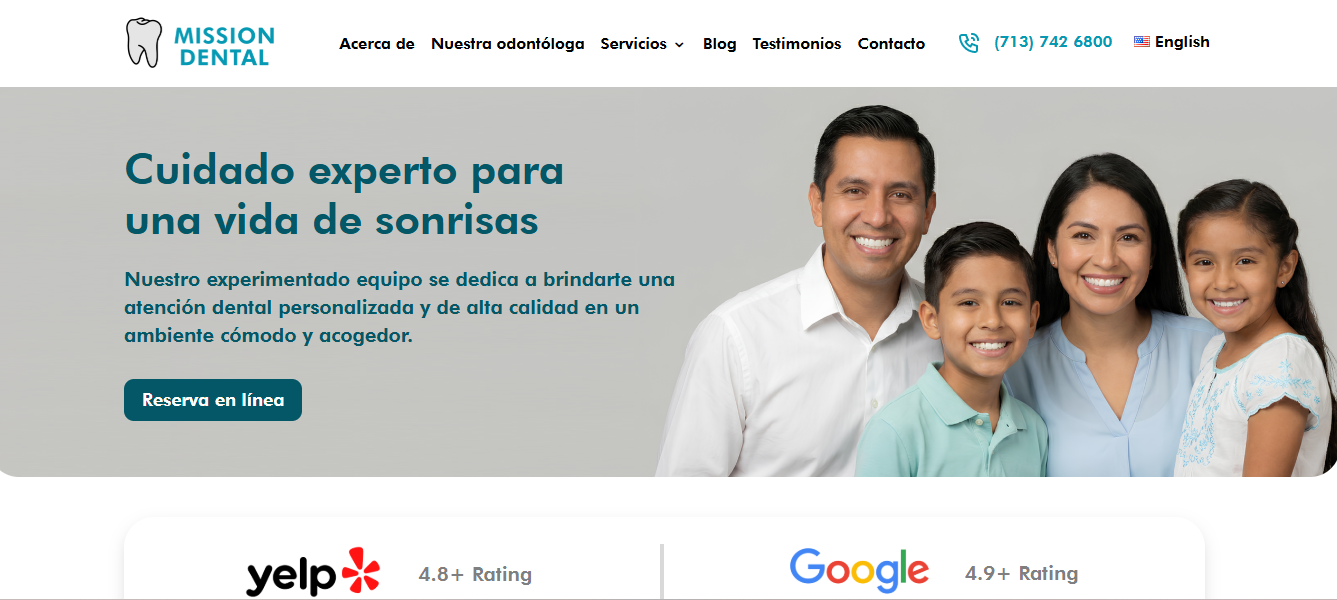
An Example of Marketing in Spanish: Mission Dental
After they started to work with WCW’s professionals in bilingual healthcare marketing, Mission Dental’s website was optimized for their Hispanic audience that is based on Houston, Texas.
Marketing in Spanish Tips for Dentists: 3 Tips to Grow Your Practice
When you’re building a content strategy for a Hispanic audience, translating content and using a few cultural references isn’t going to be enough to build trust. If you want to bring new Spanish-speaking patients to your clinic, these tips will guide you toward a successful campaign:
1. Speak Their Dialect
Using automatic translators might alter your content, leading to awkward phrasing and sounding robotic. Online Hispanic audiences respond better to localized translations that use common slang terms and specific words. For example, dental braces are called “frenillos” in Central America and South American countries like Colombia, Perú, and Ecuador, but they’re known as “aparatos” in Uruguay and Argentina.
2. Lead With Trust
For Hispanics, family and community comes first, especially in health-related decisions. Creating content about dentistry services like preventive care, pediatric dentistry, and restorative treatments for the entire family are a great way to attract new patients. Another way to express that you care for your community as a dentist is highlighting your team. Sharing information about your staff’s expertise and audiovisual content of everyone together at your clinic helps with building trust.
3. Bilingual SEO Is Key
Many of your Hispanic audience search for dental services directly in Spanish, and this is where bilingual SEO comes into play. To increase your search volume, optimize your website by using keywords in Spanish (“Dentista en Houston”, “dónde ponerme carillas en New Jersey”, “extracción de muelas en Miami”).
Another way to incorporate bilingual SEO into your content strategy is to build your Google Business Profile, ensuring that you mention in your description that you also serve Hispanic patients in your area.
.
FAQ
Is using Google Translate or AI tools for my Spanish content wrong?
Although automatic translators are more advanced, they still miss cultural nuances, regional slang terms, and the emotional tone that characterizes Hispanic audiences. Instead, a human-reviewed content developed by an informed writer connects more with Spanish-speaking prospects.
Does my website need to be optimized to attract the Hispanic community?
When you start to cater to a Hispanic audience, what your website needs is to be user-friendly and to be available in Spanish. The goal is to help patients book their dentist appointment easily, without worrying about a language barrier.
Where can dentists start with marketing in Spanish?
If you’re searching for a team of healthcare marketing experts, you can contact White Coat Web. By localizing your content, optimizing your website, and understanding what your audience is looking for, they can help you grow your dental practice. Get in touch and start welcoming your new Hispanic patients.