

At White Coat Web, we believe we have seen it all: authentic horror stories of slow and bad websites. We could write the burn book of sites that fail to address the fundamental goal of a plastic surgery web design: Communicate value. So today, we have an amusing surgical dissection of web design malpractice in the cosmetic surgery world.
Dissecting the Web Design Elements you Need as a Plastic Surgeon
To perform this autopsy on terrible plastic surgery web design, we will highlight those disasters that fill our pathology textbook. After two decades of watching surgeons who can perform miracles with a scalpel completely butcher their online presence, I present to you the definitive guide to not looking like a quack on the internet.
Consider this your surgical checklist for plastic surgery web design. Miss any of these elements, and your website will hemorrhage potential patients faster than a resident’s first solo surgery.
- Professional, High-Quality Photography (Or Why Your iPhone Isn’t Always Enough)
- Clear Surgeon Credentials and Certifications (The Academic Pedigree Display)
- Patient Testimonials and Reviews Integration (The Social Proof Phenomenon)
- Security Badges and HIPAA Compliance Indicators (The Digital Sterile Field)
1. Professional, High-Quality Photography (Or Why Your iPhone Isn’t Always Enough)
Let’s start with the obvious, and somehow most frequently ignored, element in plastic surgery web design: (good) photography. We’ve seen before-and-after galleries that resemble those shot during an earthquake with a potato. This is plastic surgery, not CSI.
What Separates the Professionals From the Amateurs?
- Photos that don’t require forensic enhancement to be viewed.
- Lighting that doesn’t make your facility look like a morgue.
- Before-and-after shots with consistent angles (Choose the images where “the after” is, in fact, a nice result, revolutionary concept, I know).
- Images of your facility that suggest “sterile medical environment,” not “abandoned warehouse.”
When patients see grainy, poorly lit photos, you lose authority, and the brain of your potential patients starts screaming, “DANGER!” You might be the next Michelangelo of mammoplasty. Still, if your photos look like they were taken during a power outage, patients will assume your surgical skills match your photography skills. It’s kind of an adverse “halo effect.”
🥼 Related content: Digital Marketing for Plastic Surgeons: Turning “Before and After” into Leads
2. Clear Surgeon Credentials and Certifications (The Academic Pedigree Display)
Patients researching plastic surgery have typically done more homework and research than a lot of medical students before finals. Not including your qualifications in your plastic surgery web design is shooting yourself in the foot.
Your credentials page should resemble a medical CV, not a collection of participation trophies from your high school yearbook. Essential credentialing that actually matters:
- Board certifications.
- A medical school that people have heard of.
- Years of experience measured in decades, not months.
- Professional memberships that require more than a credit card to join.
Create a credentials section so comprehensive that even your haters would be impressed. If you’re proud of your training, flaunt it. If you’re not, maybe consider a career in administrative medicine.
3. Patient Testimonials and Reviews Integration (The Social Proof Phenomenon)
In a world gone digital, where once people turned to family and friends for recommendations, it is now the word of strangers online that helps them make decisions. Hence, having testimonials is more important than ever in your plastic surgery web design. It can make or break your practice. A negative review is like a fly in your soup; it can ruin your stellar reputation or work on your Google Business Profile. On the flip side, consistent positive feedback paves the road to your long-term goals.
You need a Review Management strategy. With this, you can:
- Establish trust and credibility with potential patients
- Enhance your reputation
- Outshine local competition
- Ensure accuracy and transparency
- Lead more patients to your doors
- And increase profitability
If you have good testimonials that express genuine emotion, happiness, and satisfaction, you will have a big advantage over your competitors. On the other hand, fake or bad testimonials that sound like they were written by someone who learned English from medical textbooks. It can create an opposite effect, since nobody talks like that.
🥼 Related content: Medical Review Management: 5 Powerful Reasons You Need It
4. Security Badges and HIPAA Compliance Indicators (The Digital Sterile Field)
If you’re reading this, you probably manage sensitive information (as well as your website). Before patients start to pay, they need to trust you, to know that you understand the responsibility for their data. Part of being online is considering the essential security infrastructure of your website:
- SSL certificates (that little lock icon that separates legitimate sites from phishing expeditions)
- HIPAA compliance statements that actually mean something
- Privacy policies written in English, not legalese hieroglyphics
- Secure patient portals that don’t look like they were designed in 1995
These five elements work together like a well-coordinated surgical team. Each one supports the others, and weakness in any area compromises the entire operation. A website with professional photos but sketchy security is like a surgeon with excellent technique but dirty instruments; the outcome isn’t going to be good.
🥼 Related content: Empower Your Practice with HIPAA Compliant Marketing Services
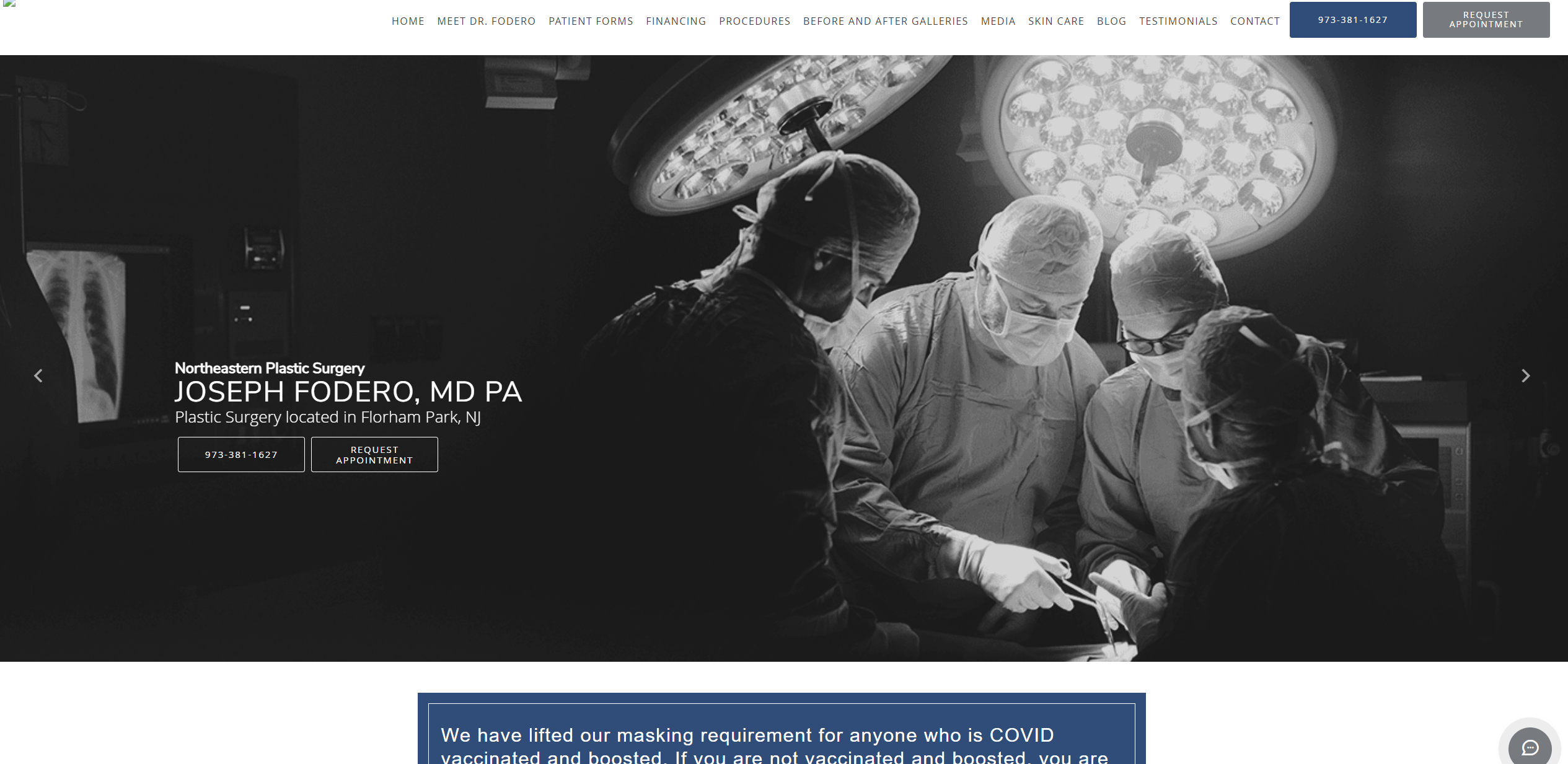
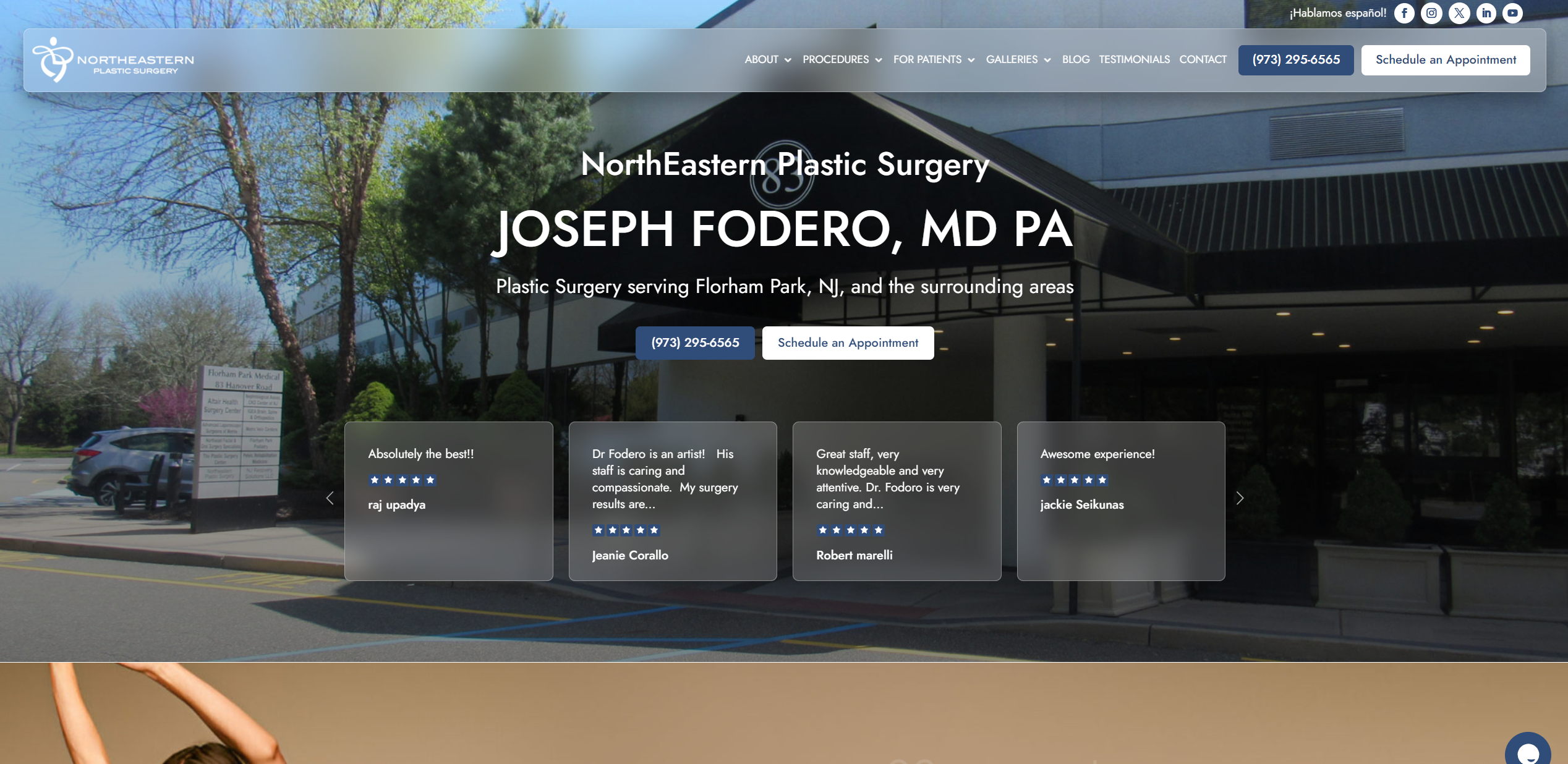
An example of our own
When Northeastern Plastic Surgery approached us, their website look dated, dark, unapproachable. After going under our scalpel, it has attracted numerous visits and their calendar is full.
Check out the transformation below 👇
Prognosis and Follow-Up
The internet is littered with plastic surgery websites that look like they were designed by someone who thinks “user experience” is what happens when you accidentally click on a pop-up ad. Don’t be part of those statistics.
Your website is making a lasting impression. Make sure your digital technique is as refined as your surgical technique. At White Coat, we know how to secure top-ranking positions and create an efficient plastic surgery web design that delights users and drives results.
If you’re ready to put your digital marketing efforts under the knife, let White Coat Web guide you. Our team specializes in cutting through the noise, ensuring your practice shines online while adhering to industry standards. It’s time to scrub in and operate on your marketing strategy—one click, one patient at a time.